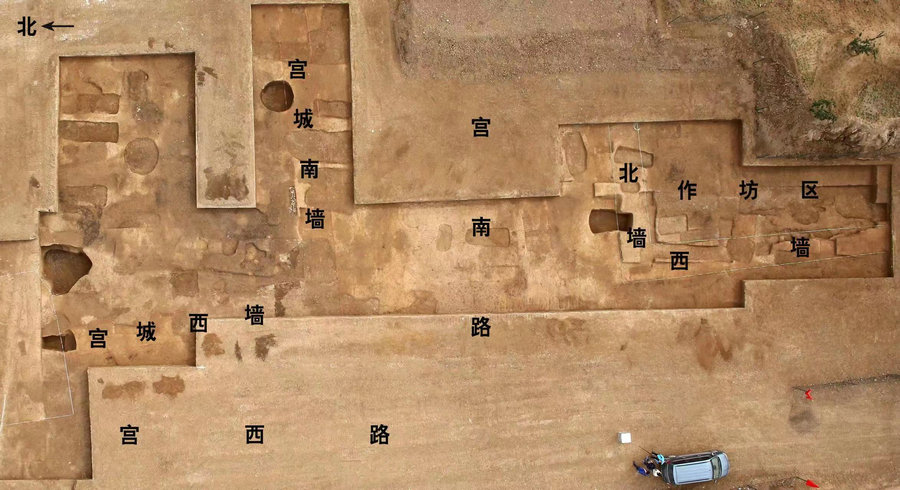
Crisscrossing Road Network of Erlitou Site
Introduction
The Crisscrossing Road Network of the Erlitou Site is a significant archaeological discovery located in Luoyang, Henan province. Dating from the 18th to the 16th century BC, this network is part of the larger Erlitou site, which is believed to be one of the earliest urban centers in ancient China. The intricately designed road network offers vital insights into the urban planning and societal organization of early Chinese civilization. Recognized as one of the "Top 10 New Archaeological Discoveries of 2022", the site is critical for understanding the development of national systems and the foundations of Chinese civilization.
Background
The Erlitou site is part of a larger region thought to be the heart of early Chinese civilization. It dates back to the period traditionally associated with the late Xia Dynasty (c. 21st century-16th century BC), which is often considered the first dynasty in Chinese history. The site was first discovered in the 1950s, and it has since been a focal point for archaeological research due to its extensive ruins and historical significance. The road network at Erlitou represents a sophisticated level of urban planning, reflecting the cultural and political complexities of the time. The discovery of this network provides crucial evidence for the existence of advanced societal structures and offers a glimpse into the daily life and governance of its inhabitants.
Discovery and Excavation
The crisscrossing road network was uncovered through systematic excavations undertaken by Chinese archaeologists. The site, which spans several square kilometers, was found to contain a series of roads that intersect at various points, suggesting a well-planned urban layout. Excavations have revealed that these roads were constructed with precision and purpose, reflecting the high level of organization and engineering skills possessed by the people of the time. The discovery process involved meticulous excavation techniques to preserve the integrity of the site and to uncover the precise layout and construction methods of the roads.
Description of the Road Network
Structure and Layout
The road network at the Erlitou site is characterized by its geometric precision and thoughtful design. The roads intersect at right angles, forming a grid-like pattern that is indicative of deliberate urban planning. This layout suggests that the city was designed with specific functional areas in mind, such as residential, commercial, and administrative zones. The roads vary in width, with the main thoroughfares being wide enough to accommodate significant traffic, while smaller roads likely served local neighborhoods. This structural organization reflects an advanced understanding of urban development and community planning.
Construction Techniques
The construction of the road network demonstrates advanced engineering techniques for the period. The roads were likely built using layers of compacted earth and gravel, which would have been effective in managing rainwater and reducing wear over time. Some roads may have been paved with stone slabs, a technique that would have required skilled labor and significant resources. The construction methods employed suggest a well-coordinated effort involving numerous workers and a centralized authority to oversee the planning and execution of such an extensive project.
Cultural Significance
The crisscrossing road network of the Erlitou site holds immense cultural significance as it provides tangible evidence of early urbanization in ancient China. This discovery underscores the complexity and sophistication of the society that constructed it. The road network is not only a testament to the technological advancements of the time but also reflects the social, political and economic organization of the early Chinese state. It highlights the role of the Erlitou site as a central hub of activity and governance, laying the groundwork for future urban development in the region.
When compared to contemporary road networks of its time, the Erlitou road system stands out for its complexity and scale. While other ancient civilizations, such as those in Mesopotamia and the Indus Valley, also developed road networks, the Erlitou roads are particularly notable for their intricate design and integration into the broader urban plan. The level of sophistication seen at Erlitou suggests a high degree of planning and control, indicative of a centralized authority directing the construction and maintenance of public infrastructure.
Preservation and Conservation Efforts
Preservation and conservation efforts at the Erlitou site are crucial for maintaining its historical and cultural integrity. Archaeologists and conservationists work collaboratively to protect the site from environmental degradation and human interference. Techniques such as site stabilization, protective coverings and controlled access are employed to ensure the long-term preservation of the road network.








